
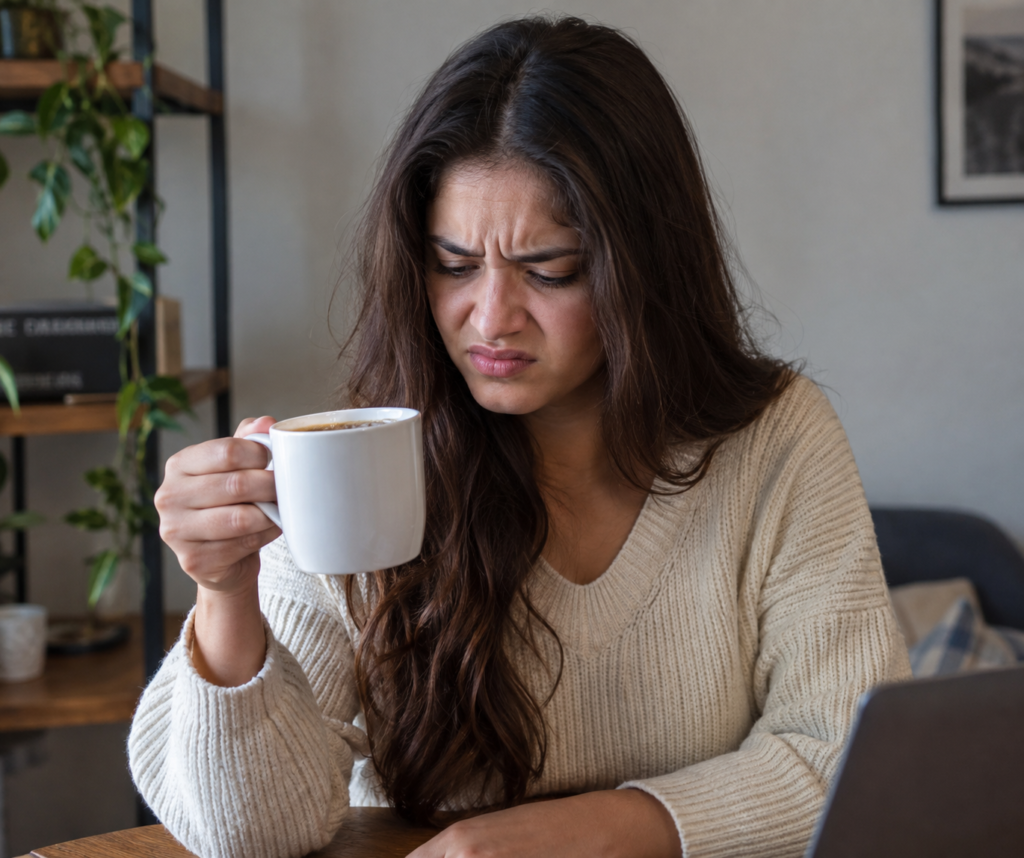
You’re probably sitting there thinking, “Why is my coffee so bitter?”
It’s a quiet morning, and you’re looking forward to that first warm, comforting sip of coffee to jump start your day. But as soon as it hits your lips, you’re hit with a harsh, mouth drying bitterness instead of a smooth, rich flavor.
It’s an annoying way to start the day, but here’s the good news: you don’t have to just accept bitter coffee.
Fixing a harsh brew is actually much easier than you think. Once you understand why my coffee is so bitter, making a few tiny tweaks to your routine can completely transform your daily cup.
Why Does Coffee Taste Bitter?
A little bitterness in coffee is completely normal.
Coffee naturally contains bitter compounds, and some bitterness can actually make a cup taste deeper and more balanced. The problem starts when bitterness becomes so strong that you cannot enjoy the sweeter, nutty, chocolate, or fruity flavors in the coffee.
When people ask why my coffee is so bitter, over-extraction is usually the first thing to check.
During brewing, hot water dissolves different flavors from the coffee grounds. Some pleasant flavors come out fairly early. If water continues extracting for too long, more dry, woody, and bitter flavors can enter the cup.
That is why changing even one part of your brewing method can make a noticeable difference.
1. Your Grind May Be Too Fine
Grind size controls how easily water can extract flavor from coffee.
A fine grind contains very small coffee particles. Because more surface area is exposed to water, extraction happens faster.
This is useful for espresso, where brewing happens very quickly. However, if the grind is too fine for a French press, drip machine, or pour-over, the coffee may extract too much before brewing is finished.
The result can taste bitter, dry, or slightly harsh.
How to Fix It
Make the grind a little coarser.
Do not make a huge adjustment straight away. Move your grinder slightly coarser, make another cup, and compare the taste.
If the bitterness becomes softer without making the coffee weak or sour, you are moving in the right direction.
2. You Are Brewing for Too Long
Even good coffee can become bitter when it stays in contact with water for too long.
Imagine making tea and forgetting the tea bag in the cup. After enough time, the flavor becomes much stronger and less pleasant.
Something similar can happen with coffee.
A French press left steeping too long may become bitter. A pour-over can also over-extract when the water drains very slowly through the grounds.
How to Fix It
Reduce the brew time slightly.
With a French press, you can press the plunger a little earlier.
For pour-over coffee, a slightly coarser grind may help the water move through the grounds faster.
With espresso, a shot that runs too slowly may also need a coarser grind.
Small timing changes are usually better than making a dramatic adjustment.
3. Your Water May Be Too Hot
Water temperature has a direct effect on extraction.
Hotter water pulls flavor from coffee more quickly. If the temperature is too high, especially with dark roasted beans, the cup can become more bitter than you want.
A useful brewing range for many coffee methods is around 195°F to 205°F, or roughly 90°C to 96°C.
How to Fix It
Avoid pouring aggressively boiling water straight onto the coffee.
If you do not have a temperature-controlled kettle, boil your water and give it a short moment to cool before brewing.
With a dark roast, you can also try brewing closer to the lower end of the temperature range.
The idea is not to make the water cool. You simply want to avoid extracting more than necessary.
4. The Coffee to Water Ratio Is Off
Sometimes bitter coffee is caused by the amount of water you use.
If too much water passes through a small amount of coffee, more material can be extracted from each coffee particle.
On the other hand, using too much coffee can make the drink very strong, and some people may also perceive that strength as bitterness.
How to Fix It
Measure both your coffee and water instead of guessing.
A common starting point is around 1 gram of coffee for every 15 to 17 grams of water.
You can then adjust the ratio based on your taste and brewing method.
Consistency matters more than finding one “perfect” ratio for every coffee.
5. Dark Roast Coffee Can Naturally Taste More Bitter
Sometimes your brewing method is not the main problem. The beans themselves may naturally have a stronger bitter taste.
Dark roasted coffee spends more time exposed to heat during roasting. As the roast develops, the flavors can become deeper, smokier, and more roasted. That is exactly what some coffee drinkers enjoy, but others find it too bitter. Dark roast coffee is also easier to extract than lighter coffee, so it can become over-extracted more easily.
If you enjoy a softer and sweeter cup, you can also read our guide on how to make coffee taste sweeter without adding sugar, where we break down the sweetest cafe drinks and naturally sweet beans.
How to Fix It
If dark coffee always tastes too bitter to you, try a medium roast.
You may also enjoy coffee with tasting notes such as:
- Caramel
- Milk chocolate
- Honey
- Brown sugar
- Nuts
- Ripe fruit
These coffees may give you a smoother and naturally sweeter impression.
If you enjoy a softer and sweeter cup, you can also read our guide on how to make coffee taste sweeter without adding sugar.
You can place the link to your previous article on the sentence above.
6. Robusta Beans Can Taste Stronger
Bean type can also change bitterness.
Robusta coffee usually has a stronger, heavier, and more bitter flavor than Arabica.
That does not mean Robusta is always bad. It is used in many espresso blends because it can add body and intensity.
However, if you prefer a smoother cup, a coffee made mostly or entirely with Arabica beans may suit you better.
How to Fix It
Check the coffee bag.
If you are using a Robusta-heavy blend and find it too strong, try an Arabica coffee or a blend with a higher percentage of Arabica beans.
7. Your Beans May Be Stale
Coffee does not stay fresh forever.
Once roasted coffee is exposed to air, its aromas and flavors slowly change. Over time, fresh and interesting flavors can fade, leaving a flatter and sometimes harsher cup.
Poor storage can make this happen faster.
How to Fix It
Keep your beans in an airtight container away from:
- Direct sunlight
- Heat
- Moisture
- Strong smells
A cool kitchen cupboard is usually a better place than leaving an open bag next to the stove.
Grinding the beans shortly before brewing can also help preserve more aroma.
Bean choice has a big effect on sweetness too, so checking out our guide to naturally sweet coffee beans and drinks may help if you want a smoother cup without relying on extra syrups and sugar.
This is another natural place where you can add your previous article link.
8. Your Coffee Equipment Needs Cleaning
This reason is easy to overlook.
Coffee contains natural oils. Small particles and oils can slowly build up inside grinders, coffee makers, baskets, filters, and espresso machine parts.
Over time, old coffee residue can develop an unpleasant taste.
So even fresh coffee can taste bitter if it is passing through dirty equipment.
How to Fix It
Clean the parts of your setup that regularly touch coffee.
Depending on your brewing method, this may include the:
- Grinder
- Filter basket
- Coffee pot
- French press
- Portafilter
- Espresso basket
- Group head
- Reusable filter
For espresso machines, follow the manufacturer’s instructions for cleaning and backflushing.
Sometimes a proper cleaning is enough to noticeably improve the next cup.
How to Make Coffee Less Bitter
Once you understand the cause, fixing bitter coffee becomes much easier.
The most important rule is simple:
Change one thing at a time.
If you change your grind, water temperature, coffee ratio, brew time, and beans all at once, you will not know what actually fixed the problem.
Start with the easiest adjustments.
Make the Grind Slightly Coarser
If your coffee tastes bitter, grind size is a good first place to start.
Move your grinder slightly coarser and brew again using the same amount of coffee and water.
A coarser grind usually slows extraction.
If the cup tastes smoother, you have probably found part of the problem.
Brew for Less Time
Your next step is to look at brewing time.
Reduce the contact time slightly.
For a French press, this might mean pressing a little earlier.
For espresso, you may need to adjust your grind so the shot does not run too slowly.
For pour-over, improve the flow by grinding a little coarser.
Use Slightly Cooler Water
If the coffee still tastes bitter, lower the brewing temperature.
This can be especially useful with darker roasted coffee.
Try staying around 195°F to 205°F, and experiment closer to 195°F to 200°F with dark roasts.
A small temperature change can make a surprisingly noticeable difference.
Try a Medium Roast
If your brewing technique seems fine but you still dislike the taste, change the coffee itself.
A medium roast usually has less of the deep smoky character associated with very dark roasts.
Depending on the beans, you may notice more chocolate, caramel, nutty, or fruity flavors.
Use Fresh Coffee
Fresh beans give you more pleasant flavors to work with.
If your coffee has been sitting open for a long time, try a fresher bag before changing your entire brewing setup.
Also check the roast date when available.
Keep Your Equipment Clean
Your coffee can only taste as clean as the equipment you use to make it.
Rinse brewing equipment regularly and give it a deeper clean when oils begin to build up.
If you make espresso, keeping the basket, portafilter, and group head clean is especially important.
What If My Espresso Is Bitter?
Espresso can be a little more sensitive because it uses a fine grind, pressure, and a short brewing time.
A small change can have a big effect on flavor.
If your espresso tastes bitter, the coffee may be extracting for too long.
Try making the grind slightly coarser.
Also check whether the shot is flowing very slowly.
If you are using a dark roast, try lowering your brewing temperature slightly as well.
And before changing everything, make sure your machine is clean. Old coffee oils can easily affect the taste of espresso.
Can Hot Water Burn Coffee?
You may hear people say that boiling water “burned” their coffee.
The situation is a little different.
Coffee beans are roasted at temperatures much higher than normal brewing water, so your kettle is not actually roasting the beans again.
However, very hot water can increase extraction.
That extra extraction may bring out more bitter compounds, which can make the drink taste burnt, harsh, or unpleasant.
So lowering the water temperature may still help even though the coffee is not literally being burned during brewing.
Is Bitter Coffee Always Bad?
No.
A small amount of bitterness can be a good part of coffee.
Dark chocolate is a useful comparison. Chocolate can have some bitterness while still tasting rich and enjoyable.
Coffee can work the same way.
Bitterness becomes a problem when it hides everything else.
A balanced cup may have some bitterness along with sweetness, acidity, body, and aroma.
The goal is not to remove every bitter note. It is to stop bitterness from taking over the entire cup.
Fix One Thing at a Time
When trying to fix bitter coffee, avoid making several big changes together.
For example, if you use a much coarser grind, lower the temperature, shorten the brewing time, and reduce the water all at once, you may go too far.
Then your coffee could become sour, weak, or under-extracted.
Instead:
Change one thing.
Make another cup.
Taste it.
Then make another small adjustment if needed.
Your taste is the best guide.
Final Thoughts
If you keep wondering “why my coffee is so bitter,” start with the brewing process.
Your grind may be too fine, the coffee may be brewing too long, or your water may be hotter than necessary.
The beans can also play a role. Very dark roasts, Robusta-heavy blends, or stale coffee may naturally taste stronger or more bitter.
Finally, do not forget your equipment. Old coffee oils and leftover grounds can ruin the flavor of otherwise good beans.
The easiest approach is to make one small change at a time.
Try a coarser grind first. Then check your brewing time and water temperature. If the coffee still tastes too bitter, experiment with a fresher or lighter roast.
Once you find the right balance, your coffee should taste smoother while still keeping the rich flavors that make it enjoyable.
Frequently Asked Questions
Why is my coffee so bitter?
Your coffee may be over-extracted. A fine grind, long brewing time, high water temperature, dark roast, or dirty equipment can all increase bitterness.
How do I make my coffee less bitter?
Try grinding slightly coarser, shortening the brewing time, lowering the water temperature, or switching to a medium roast. Make only one adjustment at a time so you can tell what works.
Can old coffee beans taste bitter?
Yes. As coffee becomes stale, many of its fresh aromas disappear. This can leave the cup tasting flat, dull, or harsh.
Does a finer grind make coffee bitter?
It can. Fine coffee exposes more surface area to water, so extraction happens faster. If the coffee extracts too much, bitterness can become stronger.
What temperature should I use for less bitter coffee?
Around 195°F to 205°F works well for many brewing methods. With darker roasts, starting closer to 195°F to 200°F may help reduce bitterness.
Why does my espresso taste bitter?
Your espresso may be extracting for too long. Try a slightly coarser grind, check the shot time, lower the temperature for darker roasts, and make sure the machine is clean.ou can dial back that harsh taste and rescue your morning brew: